
Mar
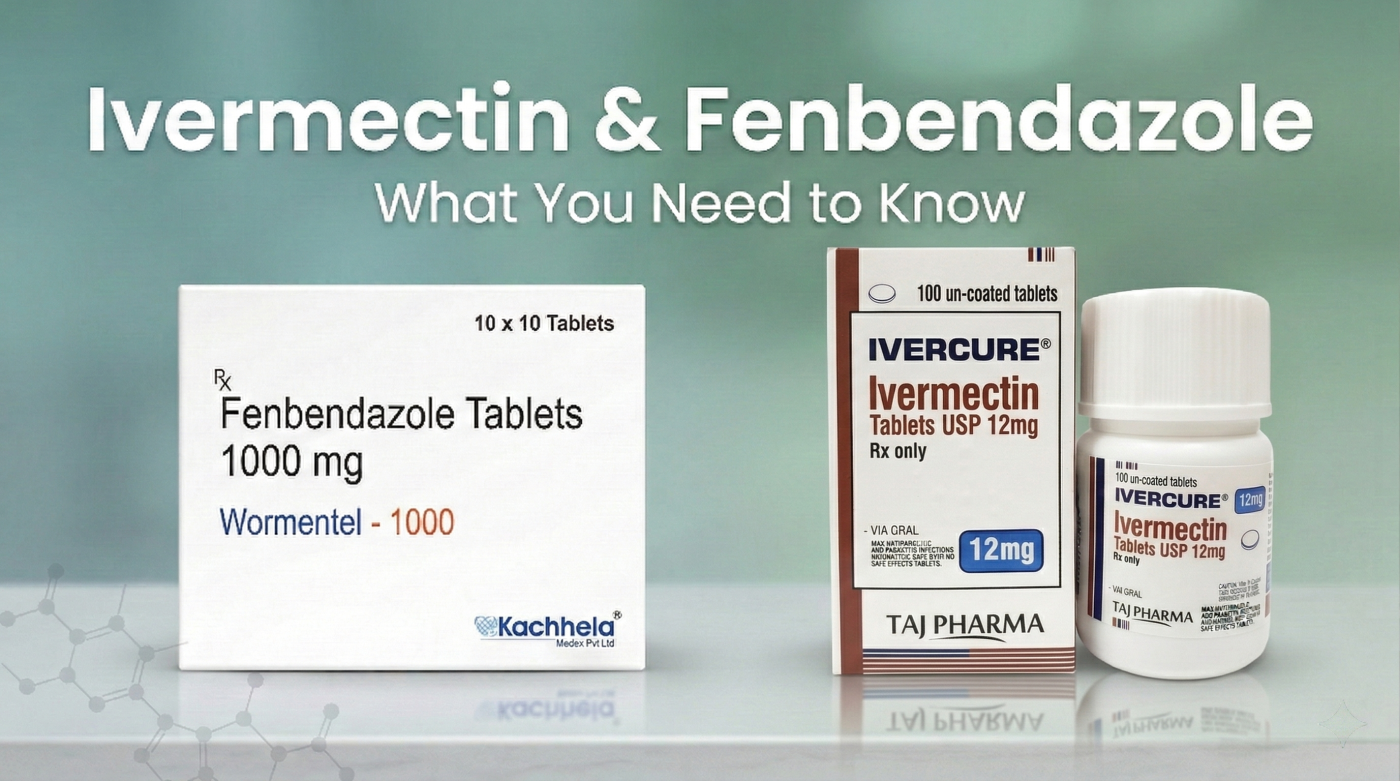
If you’ve spent any time in health forums lately, you’ve probably noticed ivermectin and fenbendazole popping up in the same conversations, sometimes in the same sentence, sometimes as if they’re two names for the same thing. They’re not. But there’s a real reason they keep appearing together, and once you understand how each one actually works, the logic behind combining them becomes pretty clear.
In this guide, we’re going to walk through exactly what each drug does, why the combination makes biological sense, what the research says (including the cancer research you’ve probably heard about), how to use them safely, and where to get them. No sensationalizing, no unnecessary alarm, just the information you need to make an informed decision with your healthcare provider.
1. Why These Two Drugs Keep Showing Up Together
A few years ago, this pairing barely existed outside of livestock management. Today, it’s one of the most searched antiparasitic topics online. So what changed?
A few things happened at once. Awareness of subclinical parasitic infections grew, the idea that many people carry low-level parasitic loads that standard testing doesn’t reliably catch. At the same time, a broader wave of interest in unconventional and adjunctive health approaches brought people toward doing their own research on treatments that sit outside conventional medicine.
Then came Joe Tippens. In 2019, his story went viral a terminal small-cell lung cancer patient who reported an unexpected recovery after self-administering fenbendazole alongside a few supplements. Whether fenbendazole caused his recovery is scientifically unknowable from a single case. But it started a conversation, and ivermectin, already gaining attention for its own emerging research, got added to the protocols that followed.
Here’s what’s worth holding onto: the enthusiasm around this combination isn’t irrational. It’s just ahead of the clinical evidence. The mechanisms are real. The parasite coverage logic is sound. The preclinical cancer research is genuinely interesting. What’s missing is the kind of rigorous human trial data that would let us say definitively how, when, and for whom these drugs work best together. We’ll cover what the science actually shows in Section 9.
2. What Each Drug Actually Is?
Ivermectin
Ivermectin has a remarkable origin story. It was discovered in the late 1970s from a soil bacterium, Streptomyces avermitilis, found at a Japanese golf course. The scientists behind that discovery shared the 2015 Nobel Prize in Physiology or Medicine. Not a lot of drugs have that kind of pedigree.
It received FDA approval for human use in 1987, and since then has become a cornerstone of global public health programs targeting river blindness and lymphatic filariasis. We’re talking about an estimated 3.7 billion doses distributed in mass treatment campaigns across sub-Saharan Africa and beyond. In its core approved applications, ivermectin’s safety record is one of the most established of any drug in modern medicine.
More recent controversies, particularly around COVID-19, generated a lot of heat and very little light. Major clinical trials didn’t support its use for that indication, and that chapter is largely closed. What hasn’t changed is its well-documented effectiveness against a broad range of parasites when used as intended.
Want to Know more about “What Ivermectin Is?” Click here…
Fenbendazole

Fenbendazole is quieter by comparison. It’s been used in veterinary medicine since the 1970s, most commonly under brand names like Panacur and Safe-Guard, and has an excellent safety record in dogs, cats, horses, and livestock. It’s the active ingredient in the deworming products you’ll find at any farm supply store.
What it doesn’t have is FDA approval for human use. That’s an important thing to understand clearly: it’s not that the drug was tested in humans and failed. It’s that no pharmaceutical company has pursued human approval, because fenbendazole is off-patent and inexpensive. There’s no financial incentive to run the trials. Its close chemical relatives, mebendazole and albendazole,e are approved for human use and share its mechanism almost exactly. That’s the context that matters.
Where to buy Fenbendazole for Humans? Click here to knwo more…
How They Work, And Why the Difference Matters
Here’s why the combination actually makes sense, and it starts with how differently these two drugs attack a parasite.
How Ivermectin Works
Think of a parasite’s nervous system like a set of gates that control the flow of ions in and out of its cells. Ivermectin forces those gates open and locks them that way. The cells flood with chloride ions, the membranes hyperpolarize, and the parasite’s nervous system essentially seizes up. It can’t move. It can’t feed. It can’t reproduce. Eventually, it dies.
What’s elegant about this is the specificity. The gates of ivermectin target, glutamate-gated chloride channels, are present in invertebrates but structured very differently in mammals. That’s why the drug can be dosed safely in humans. It’s attacking something the parasite has that we largely don’t.
How Fenbendazole Works
Fenbendazole takes a completely different route. Instead of the nervous system, it goes after the parasite’s cellular architecture. Picture the scaffolding inside a construction site, the structure that holds everything in place while the building goes up. Fenbendazole pulls that scaffolding out.
The target is beta-tubulin, the protein that builds microtubules, the internal scaffolding every cell depends on for division, structure, and nutrient transport. When fenbendazole binds to beta-tubulin and prevents microtubule formation, the parasite loses its ability to maintain its own cell structure. It can no longer divide or absorb glucose. It collapses from the inside.
This is also why fenbendazole has attracted interest in cancer research, more on that in Section 9.
Fenbendazole vs. Ivermectin… What are the differences?
Why Using Both Makes Biological Sense
Two different targets. Two different mechanisms. That’s the core of the combination argument.
If a parasite has any partial resistance to ivermectin’s neurological attack, fenbendazole is still disrupting its cellular structure through a completely unrelated pathway, and vice versa. In veterinary medicine, rotating or combining antiparasitics with different mechanisms is standard practice precisely for this reason. It dramatically reduces the likelihood that any parasite population develops resistance to both at once.
In human antiparasitic protocols, the logic holds. Whether someone genuinely needs both depends on what they’re actually dealing with, and that’s a question worth exploring with a knowledgeable provider.
4. What They Treat: Where the Coverage Overlaps and Where It Doesn’t
The most practical way to see why these drugs complement each other is to look at what each one covers and where the other one falls short. Here’s the breakdown:
How Long Does it Take for Ivermectin to Kill Parasites?
The pattern is clear. Ivermectin dominates against ectoparasites (mites, lice), filarial worms, and strongyloides. Fenbendazole is stronger against tapeworms, whipworms, and Giardia. They overlap on common roundworms and hookworms, which just adds coverage redundancy rather than creating any problem.
If you have a confirmed single-species infection and a prescription, you probably don’t need both. If the picture is less clear, which it often is, since parasitic infections are frequently underdiagnosed, the broader combined coverage starts to make more sense.
5. Ivermectin and Fenbendazole Tablets: Forms and Products
The form you use matters more than most people realize, both for dosing accuracy and for how well the drug actually absorbs.
Ivermectin
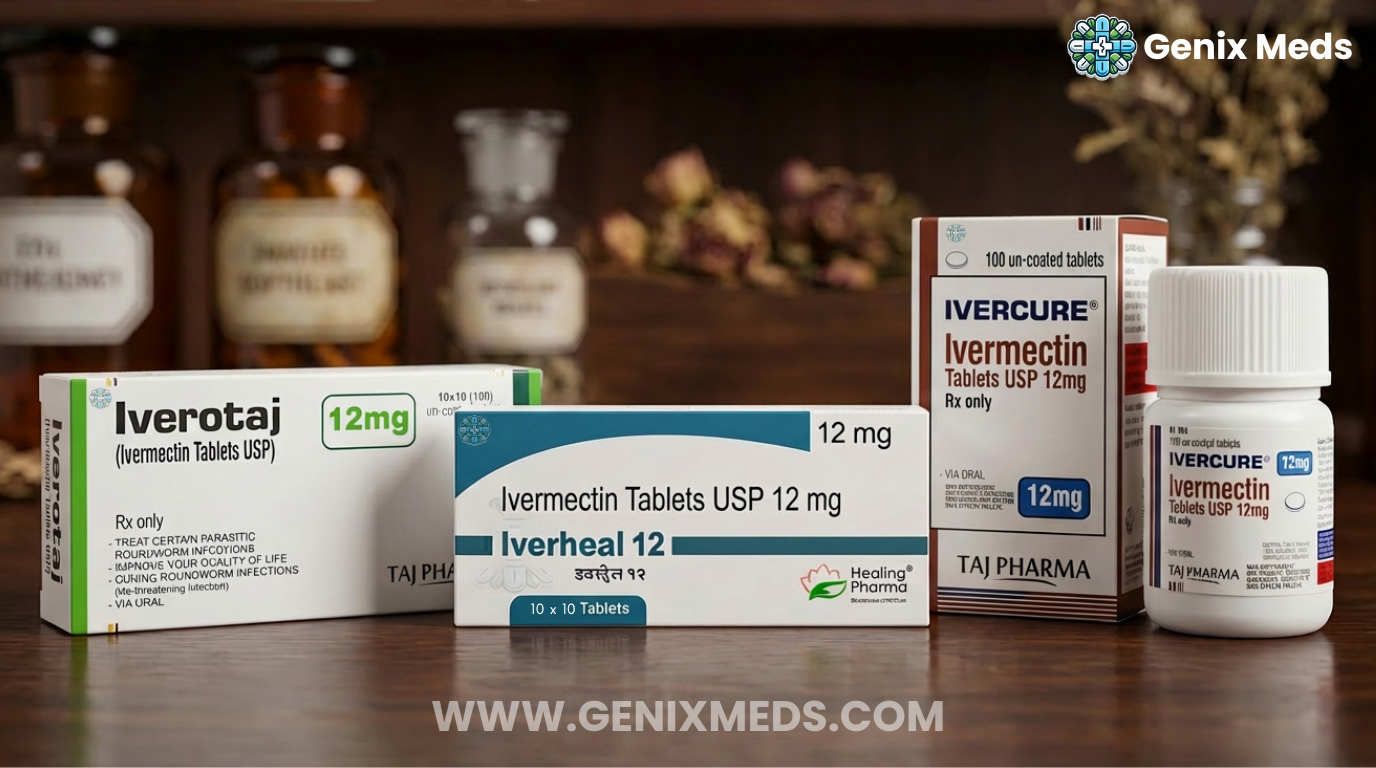
For human use, pharmaceutical-grade oral tablets are the only reasonable option. Ivercure 12mg and Iverotaj 12mg, both available at Genixmeds.com, are 12mg tablets dosed for human use.
Avoid veterinary formulations. Equine ivermectin paste is designed for a 1,200-pound horse. The concentration is different, the inactive ingredients are different, and accurate human dosing from a tube meant for an animal is not realistic. Human-grade tablets exist for a reason.
Fenbendazole
Since there’s no human-approved fenbendazole tablet, most people use veterinary products with clearly labeled concentrations. Panacur C canine sachets (222mg per packet) and Safe-Guard granules are the most commonly referenced sources in human protocols; the concentration is known, the drug is pure, and the dose is measurable.
Some specialty supplement companies now produce human-oriented fenbendazole capsules with measured doses. These can work well, but vetting the manufacturer matters; look for third-party testing documentation (a Certificate of Analysis) before ordering from an unfamiliar source.
Mebendazole: The Human-Approved Option

If you want a benzimidazole, the same drug class as fenbendazole, same mechanism, with a human approval history, mebendazole is the straightforward choice. It works the same way as fenbendazole, has a clearer human dosing framework, and is available as MendiTaj 500mg through Genixmeds.com. Worth knowing about, especially if you’re cautious about using a veterinary product for human use.
6. How People Are Using Them Together
There’s no single standardized protocol for combining these drugs in humans; what exists is a range of community-developed approaches, each with its own rationale. Here’s what the most common ones look like, and the principles behind them.
Alternating Weeks
One drug per week, rotating. Ivermectin one week, fenbendazole the next. The idea is to maintain ongoing coverage across a broader parasite spectrum while keeping the daily pill burden lower. The drawback: depending on the parasite life cycle, alternating weekly may miss windows of vulnerability.
Concurrent Dosing
Both drugs are taken on the same day or adjacent days within a cycle. More comprehensive coverage simultaneously, shorter overall course. The tradeoff is that more parasites dying at once means more die-off byproducts, which is where binder timing becomes especially important.
The Pulse Protocol
Three days on, four days off, repeated over weeks or months. This is the structure most associated with the Joe Tippens-style fenbendazole protocol, and it gets adapted into combination use by many people. The logic is that the on/off rhythm mirrors parasite life cycles, hitting vulnerable stages that continuous dosing might miss.
A Few Principles That Apply Regardless of Protocol
- Take both drugs with food, ideally with fat. Absorption for both ivermectin and fenbendazole improves significantly with a fatty meal. This isn’t optional advice; it’s pharmacokinetically relevant.
- Take binders well after your dose, not simultaneously. More on this in the next section.
- Build in rest periods. Long unbroken courses aren’t standard. Cycling gives your liver time to clear metabolites and reduces cumulative hepatic burden.
- Monitor liver function during extended use. Both drugs are metabolized by the liver. A baseline liver enzyme panel and periodic follow-up are reasonable for anyone running multi-week protocols.
None of these protocols is clinically standardized for human use. They reflect community-developed frameworks that are worth understanding and worth discussing with a healthcare provider before you start.
7. Which Binder to Use, And the One Timing Rule You Can’t Get Wrong
A binder is exactly what it sounds like: something that binds. The idea behind using one in an antiparasitic protocol is that when parasites die, especially in large numbers, they release toxins and metabolic waste products. A binder traps those compounds in your gut before your body can reabsorb them.
In patients with heavy parasite burdens, this die-off effect is clinically documented. Think of it like clearing a major traffic jam on a highway: when the blockage finally breaks, everything that was backed up moves at once, and the system has to handle it. Binders help manage that process.
Whether a binder is necessary for lighter antiparasitic use in generally healthy people is debated. Many practitioners recommend them for any extended combination protocol. Here’s what’s available:
Which Binders to Take with Ivermectin and Fenbendazole? Click here for more info!
The One Rule That Matters Most
Take your binder at least 1.5 to 2 hours after your antiparasitic dose. Not before. Not with it. After.
Here’s why this matters so much: binders don’t distinguish between what they’re supposed to bind and what they’re not. A binder taken at the same time as ivermectin will absorb the drug before your gut does. You’ve effectively taken your medication and then immediately neutralized it. That’s not a minor inconvenience; it cancels the entire dose.
Most practitioners recommend a 2-hour minimum gap. Some prefer 3–4 hours. When in doubt, wait longer.
8. What You Need to Know About Safety and Dosing
Let’s be direct about this section: we can give you the clinical framework, but actual dosing for your specific situation requires a provider who knows your weight, your liver function, your other medications, and your reason for using these drugs. What follows is context, not a prescription.
Ivermectin Dosing
FDA-approved dosing for adults is weight-based. For strongyloidiasis and scabies, that’s typically 200 mcg per kilogram, so for an 80 kg adult, roughly 16mg. Ivercure 12mg and Iverotaj 12mg are each 12mg tablets, which puts a single tablet close to a standard dose for most adults in the 60–65 kg range. Whether you need one tablet or slightly more depends on your weight, and that’s your prescriber’s calculation to make.
Ivermectin is generally well-tolerated. The most common side effects are mild: nausea, mild dizziness, occasional rash. Serious adverse events are rare at therapeutic doses. The main exception involves a genetic mutation (MDR1/ABCB1) that affects how the blood-brain barrier handles ivermectin , people with this mutation can experience neurotoxicity at doses that would otherwise be safe. Testing is available if you have a reason to be concerned.
Fenbendazole Dosing
There’s no FDA-approved human dose. The most widely referenced approach, derived from the Joe Tippens protocol, uses 222mg three days per week. Some integrative practitioners use dosing analogous to mebendazole (100–500mg depending on indication), given that the two drugs are pharmacologically similar.
Fenbendazole’s half-life is shorter than ivermectin’s, roughly 3–9 hours versus 12–56 hours for ivermectin, which informs the more frequent dosing in most protocols.
Who Should Be Especially Careful
- Anyone with liver disease, both drugs are processed hepatically.
- When people take medications that interact with the CYP3A4 enzyme pathway, potential drug interactions exist.
- Pregnant women, both drugs have limited human pregnancy safety data; fenbendazole especially.
- Children, protocols designed for adults should never be applied to kids without specialist guidance on weight-appropriate dosing.
9. The Cancer Research Angle: What the Science Says So Far
This is the section that brings a lot of people to this topic, and it deserves a careful, honest answer.
The cancer research on both fenbendazole and ivermectin is real. It’s also still early. Here’s what we actually know.
Fenbendazole and Cancer
The interest starts with that same beta-tubulin mechanism. Cancer cells divide constantly, and that division depends on intact microtubule formation. When fenbendazole disrupts tubulin in a parasite, it’s using the same pathway that could disrupt a cancer cell. Several in vitro studies (meaning cell culture research) have shown that fenbendazole can inhibit tumor cell growth, trigger apoptosis (programmed cell death), and interfere with how cancer cells take in glucose.
A 2008 study in Cancer Research showed that mice receiving fenbendazole in their diet had significantly reduced tumor growth when implanted with human cancer cells, an accidental finding that opened the research door. That finding has been followed up with additional preclinical work across multiple cancer types.
What we don’t have yet: a completed, randomized controlled trial in humans. The preclinical data are genuinely promising. It hasn’t crossed the line into validated clinical treatment. The Joe Tippens story that sparked so much of this conversation is one person’s experience, not a clinical trial. It’s compelling. It’s not proof.
Ivermectin and Cancer
Ivermectin’s anticancer angle takes a different path. Researchers have found it interacts with several cancer-relevant targets: it inhibits a protein pump (P-glycoprotein) that tumors use to expel chemotherapy drugs; it interferes with signaling pathways involved in tumor cell proliferation; and through its same ion channel mechanism, it may trigger cell death in certain cancer cell types.
Early-phase human clinical trials exploring ivermectin as a cancer adjunct were ongoing as of 2026, with results still pending at scale.
What This Means for You
If you’re researching this because you or someone you love is dealing with a cancer diagnosis, it’s understandable to be drawn to any avenue that offers hope. The preclinical science on both of these drugs is not fiction; it’s real research conducted by legitimate scientists. But the distance between a promising lab result and a proven human therapy is long, and a lot of candidates don’t survive that journey.
Please have this conversation with your oncologist. Not instead of conventional treatment. Alongside it. That’s what the researchers studying these drugs would tell you, too.
10. What Is “Free Range” Ivermectin and Fenbendazole?
If you’ve searched for these drugs, you’ve probably come across the phrase “free range ivermectin and fenbendazole.” It sounds like a product category,y but it doesn’t have a precise definition.
“Free Range” appears to be a brand or product line name used by at least one manufacturer selling combination ivermectin/fenbendazole tablets marketed for research or veterinary use. The name suggests clean or natural sourcing, but it has no specific regulatory meaning.
If you’re evaluating a free-range product or any combination tablet, the questions to ask are:
- What is the exact concentration of each active ingredient per tablet?
- Is the product manufactured in a GMP (Good Manufacturing Practice) certified facility?
- Is there a Certificate of Analysis from third-party testing available?
- Does the label clearly disclose all inactive ingredients?
Sourcing each drug separately from a reputable supplier generally gives you more control over what you’re actually taking. When concentrations are unknown, accurate dosing becomes guesswork.
11. Where to Buy Ivermectin and Fenbendazole
Ivermectin

In the United States, human-use ivermectin requires a prescription. With a valid prescription, you can fill it at a standard pharmacy or through a licensed online pharmacy.
Genixmeds.com stocks:
- Ivercure 12mg: 12mg ivermectin tablets
- Iverotaj 12mg: 12mg ivermectin tablets, alternative brand
Stick with pharmaceutical-grade human tablets. Veterinary formulations, paste, injectable, and pour-on, are not appropriate substitutes for human use.
Fenbendazole
Fenbendazole is available OTC as a veterinary product at farm supply stores (Tractor Supply, Rural King) and through online retailers. Panacur C canine sachets and Safe-Guard are the most reliable sources for known-concentration fenbendazole used in human protocols.
Some supplement companies now produce human-oriented fenbendazole capsules with measured dosing; quality and purity vary widely, so look for third-party testing before ordering.
Mebendazole
For a benzimidazole with an established human track record, mebendazole is the cleaner option. MendiTaj 500mg is available through Genixmeds.com.
View MendiTaj 500mg at Genixmeds.com →
12. Frequently Asked Questions
Can you use fenbendazole and ivermectin together?
Yes, there’s no known pharmacological interaction that makes this combination inherently dangerous at standard doses. They work through different mechanisms and different metabolic pathways. That said, combination use in humans isn’t formally validated by clinical trials, so if you’re planning an extended protocol, loop in a healthcare provider who can monitor your liver function and account for your individual health picture.
Is fenbendazole the same as ivermectin?
Not at all. Ivermectin paralyzes parasites by locking open nerve cell channels. Fenbendazole kills parasites by collapsing their cellular scaffolding. They’re different drug classes, different chemical structures, and they treat somewhat different parasite species. The confusion comes from how often they appear together in health discussions, but they’re not interchangeable.
Which binder to use with ivermectin and fenbendazole?
Activated charcoal is the most commonly used option, strong, broad-spectrum, and widely available. Chlorella is a gentler food-based choice for longer-term protocols. Regardless of which you choose, the rule is the same: take it at least 1.5–2 hours after your antiparasitic dose. A binder taken simultaneously will bind to the drug before your body absorbs it, canceling the dose.
How do you take ivermectin and fenbendazole together?
Take both with a fatty meal to maximize absorption. Common approaches include taking them the same day (concurrent), alternating weekly, or following a pulse cycle like 3 days on/4 days off. Always keep binders well separated in time from your doses, build in rest periods between cycles, and check in with a provider if you’re running an extended protocol.
Where can I buy ivermectin and fenbendazole?
Ivermectin for human use requires a prescription in the US. Genixmeds.com carries Ivercure 12mg and Iverotaj 12mg. Fenbendazole is available OTC as a veterinary product from farm supply stores or online retailers. For a human-approved benzimidazole alternative, MendiTaj 500mg (mebendazole) is also available at Genixmeds.com.
Can ivermectin and fenbendazole treat cancer?
Both have shown genuine anticancer properties in cell and animal studies: fenbendazole through tubulin disruption, ivermectin through multiple signaling pathways. That research is real. What doesn’t exist yet is a completed human clinical trial demonstrating a survival benefit. Neither drug should replace conventional cancer treatment. If you’re interested in exploring them as adjuncts, have that conversation with your oncologist.
What are free-range ivermectin and fenbendazole?
It appears to be a product line name used by certain manufacturers for combination antiparasitic supplements, not a regulated or scientifically defined term. If you’re evaluating any combination product, check the labeled concentration of each active ingredient, look for GMP manufacturing certification, and request third-party testing documentation before purchasing.
What are ivermectin and fenbendazole tablets used for?
In veterinary medicine, combination antiparasitic tablets are used for broad-spectrum deworming. In human protocols, people use them for suspected parasitic infections, sometimes confirmed, sometimes not, and increasingly as part of research-adjacent health protocols, particularly in conversations about cancer. Ivermectin is FDA-approved for specific human parasitic infections. Fenbendazole is not FDA-approved for humans.
Is ivermectin and fenbendazole the same thing?
No. This question comes up a lot because the two are so frequently discussed together. But they belong to different drug classes, work through different mechanisms, and have different parasite coverage profiles. Fenbendazole is more closely related to mebendazole (both benzimidazoles) than it is to ivermectin.
How do I get ivermectin and fenbendazole?
Ivermectin requires a prescription; consult your doctor or a telehealth provider, then fill it at a licensed pharmacy like Genixmeds.com. Fenbendazole is available OTC from farm supply stores and online as a veterinary product. Mebendazole, the human-approved benzimidazole equivalent, is available through Genixmeds.com as MendiTaj 500mg.
13. The Bottom Line
Ivermectin and fenbendazole are genuinely interesting drugs with real, well-established antiparasitic track records and a growing body of research exploring their potential beyond that original use. The combination logic is sound, two different mechanisms, broader coverage, land ess resistance risk. The enthusiasm you’ll find online isn’t baseless.
What the enthusiasm sometimes skips past is the gap between promising and proven. Both drugs have been studied enough to be fascinating. Neither has been studied enough in human combinations to call this a validated clinical protocol. That distinction matters, especially if you’re dealing with a serious health concern.
Here’s what we’d suggest: get clear on what you’re actually trying to address. Talk to a healthcare provider who is genuinely knowledgeable about both the conventional evidence and the emerging research landscape. Take the drugs that make sense for your specific situation, at doses appropriate for your body weight, with proper monitoring in place.
If you’re looking for the products themselves, Genixmeds.com carries Ivercure 12mg and Iverotaj 12mg for ivermectin, and MendiTaj 500mg for mebendazole. You have good options. Use them wisely.
Medical Disclaimer
This article is intended for informational and educational purposes only and does not constitute medical advice, diagnosis, or treatment. Fenbendazole is not FDA-approved for human use. Ivermectin for human use requires a prescription in the United States. Neither drug should be self-administered without guidance from a qualified healthcare provider. References to cancer-related research do not constitute a treatment recommendation. Always consult your physician before starting, stopping, or modifying any medication or supplement protocol.