
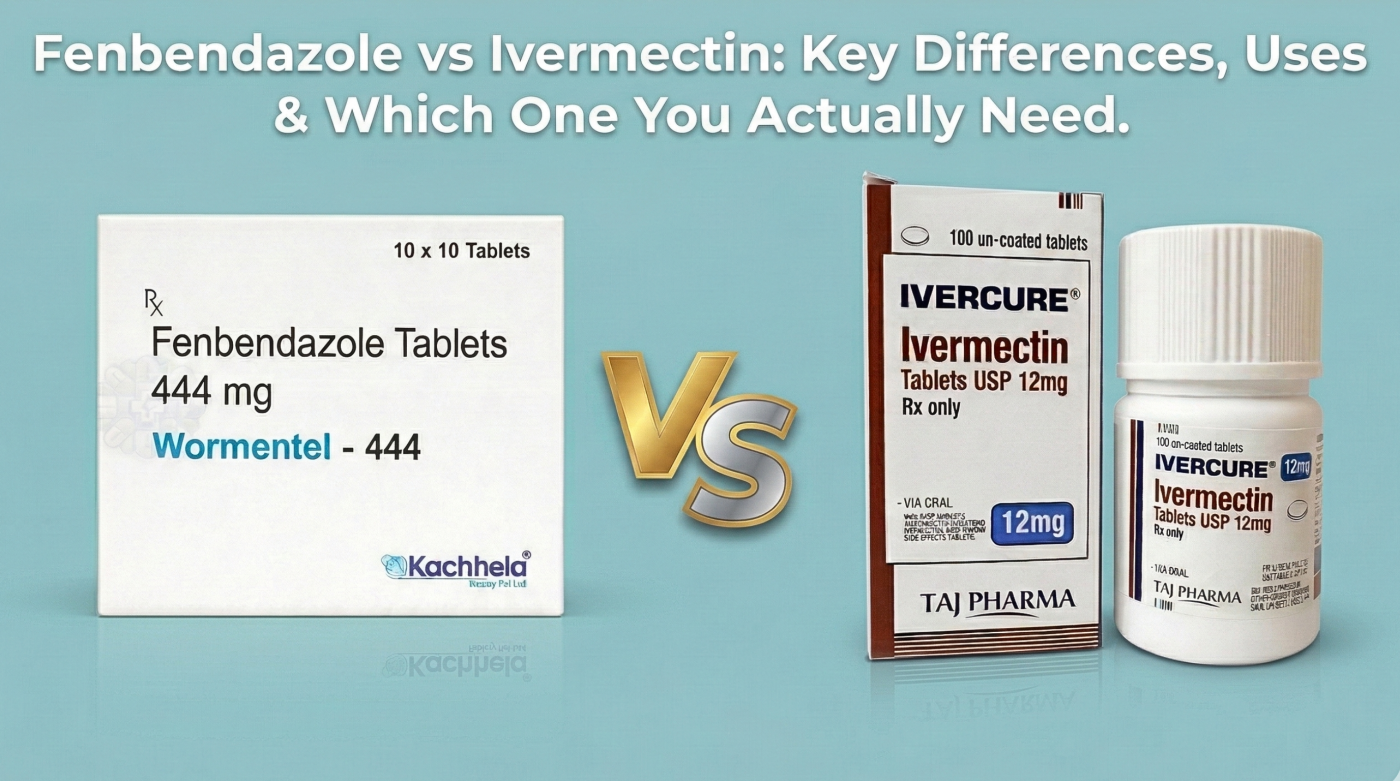
Mar
1. What Are Fenbendazole and Ivermectin?
Before diving deep into these drugs, first, we need to understand what they are and how they work in your body, along with unknown information about them.
1.1 Ivermectin
Ivermectin is a macrocyclic lactone antiparasitic derived from a fermentation product of Streptomyces avermitilis, a soil-dwelling bacterium discovered in Japan in the 1970s. The drug was developed by Merck and introduced in 1981, initially for veterinary use. It later received FDA approval for human use in 1987 under the brand name Stromectol, primarily for the treatment of river blindness (onchocerciasis) and strongyloidiasis.
It went on to become one of the most widely prescribed medications in human history, part of a landmark global health program that has treated hundreds of millions of people in tropical regions. In veterinary medicine, its reach is even broader: it’s used in horses, cattle, sheep, dogs, cats, and numerous other species.
In more recent years, ivermectin attracted significant attention during the COVID-19 pandemic, though major clinical trials did not support its use for that indication. That controversy is separate from its well-established antiparasitic applications, which remain clinically valid and widely used.

1.2 Fenbendazole
Fenbendazole is a benzimidazole anthelmintic, a synthetic drug developed in the 1970s and widely used in veterinary medicine for decades. It’s the active ingredient in products like Panacur and Safe-Guard, used to treat intestinal parasites in dogs, cats, horses, and livestock.
It is not FDA-approved for human use, though it is closely related to mebendazole and albendazole, two benzimidazoles that are approved for human use. Fenbendazole has been available over the counter for animals and has attracted growing interest in human health contexts, particularly surrounding its potential antiproliferative properties. We’ll get into the cancer research in Section 8.
|
Looking for Ivermectin? Genixmeds.com Has You Covered Genixmeds.com stocks two quality ivermectin options: Ivercure 12mg and Iverotaj 12mg. Browse either product page for full details. |
2. How Each Drug Works: Mechanism of Action
This part is really important as an individual should also know why they can’t simply substitute each other.
2.1 Ivermectin’s Mechanism
Ivermectin works by binding to glutamate-gated chloride ion channels, proteins found in the nerve and muscle cells of invertebrates. When ivermectin binds to these channels, it causes them to open permanently, flooding the cells with chloride ions. This hyperpolarizes the cell membrane, paralyzing the parasite’s nervous system and musculature.
The result: the parasite loses motor function, can no longer feed or reproduce, and ultimately dies. In nematodes and arthropods, this mechanism is highly selective the glutamate-gated chloride channels that ivermectin targets are either absent or structured differently in mammals, which is why the drug has a strong safety margin at therapeutic doses in humans.
Ivermectin also interacts with GABA-gated ion channels, amplifying its paralytic effect on susceptible parasites.

2.2 Fenbendazole’s Mechanism
Fenbendazole takes a completely different route. It binds to beta-tubulin, a structural protein that forms the microtubules parasites rely on for cell division, nutrient transport, and maintaining their basic cellular architecture. By binding to beta-tubulin, fenbendazole prevents tubulin from polymerizing into functional microtubules.
Without intact microtubules, parasites can’t maintain their cell structure, can’t divide, and can’t absorb glucose efficiently. They starve and fall apart. This mechanism is shared across the benzimidazole class mebendazole and albendazole work the same way.
Importantly, this beta-tubulin disruption is also why researchers have been investigating fenbendazole in oncology contexts: tubulin is also critical for cancer cell division, and the drug may interfere with tumor cell replication through a similar pathway.

2.3 Why the Mechanism Difference Matters
These two drugs don’t work the same way at all. That means:
- They don’t have redundant effects on the same parasite species.
- Combining them creates complementary, not overlapping, coverage.
- One cannot simply replace the other when treating a specific parasite type.
- Their side effect profiles, drug interactions, and contraindications differ accordingly.
3. What Conditions Does Each Treat?
3.1 What Ivermectin Treats
Ivermectin is approved in humans for:
- Strongyloidiasis: intestinal infection caused by Strongyloides stercoralis
- Onchocerciasis (river blindness): caused by Onchocerca volvulus, transmitted by black flies
- Scabies: both standard and crusted (Norwegian) scabies
- Head lice: topical formulations approved in the US
Off-label uses with varying levels of evidence include: lymphatic filariasis (often in combination), cutaneous larva migrans, gnathostomiasis, loiasis, and certain cases of rosacea (topical ivermectin cream is FDA-approved for inflammatory rosacea lesions).
In veterinary settings, ivermectin treats heartworm disease, mange (demodectic and sarcoptic), ear mites, lungworm, and a wide range of gastrointestinal nematodes across many species.
3.2 What Fenbendazole Treats
In veterinary medicine, fenbendazole is used for:
- Roundworms (ascarids)
- Hookworms
- Whipworms
- Certain tapeworm species (Taenia — though not Dipylidium)
- Giardia (in dogs, off-label)
- Lungworm in various species
In humans, fenbendazole is not formally approved, but its close relatives mebendazole and albendazole are used for pinworm, roundworm, hookworm, whipworm, trichinosis, and several other helminth infections. Fenbendazole is sometimes used by individuals in human protocols given its pharmacological similarity and availability.
4. Fenbendazole vs Ivermectin: Side-by-Side Comparison
Here’s the full comparison in one place:
|
Feature |
Ivermectin |
Fenbendazole |
|
Drug class |
Macrocyclic lactone |
Benzimidazole |
|
Origin |
Derived from Streptomyces avermitilis (soil bacterium) |
Synthetic anthelmintic; related to thiabendazole |
|
Primary mechanism |
Binds glutamate-gated Cl⁻ channels → paralysis |
Disrupts beta-tubulin → collapses parasite cytoskeleton |
|
Best against |
Roundworms, mites, lice, heartworm, and some ectoparasites |
Tapeworms, roundworms, and certain protozoans; emerging oncology use |
|
Approved human use |
Strongyloidiasis, onchocerciasis, scabies, and head lice |
Pinworm, roundworm, hookworm, whipworm (human label) |
|
Veterinary use |
Extremely broad — livestock, horses, dogs, cats |
Dogs, horses; less common than ivermectin in vet settings |
|
Oral bioavailability |
Improved with a high-fat meal |
Low (~20–25%); fat also enhances absorption |
|
Half-life (human) |
~12–56 hours |
~3–9 hours (active metabolites longer) |
|
Common forms |
Tablet, topical cream, oral paste, injectable |
Tablet, suspension, capsule |
|
Available at Genixmeds? |
Yes — Ivercure 12mg, Iverotaj 12mg |
Mebendazole (same class): MendiTaj 500mg |
|
Rx status (US) |
Prescription required |
OTC for pinworm; Rx for broader use |
One thing the table makes clear: these drugs occupy different therapeutic niches. Ivermectin is stronger against ectoparasites (mites, lice), filarial worms, and certain nematodes. Fenbendazole’s strength is in cestodes (tapeworms), additional nematode coverage, and its emerging role in research on abnormal cell growth. Together, they cover more ground than either does alone which is why combination protocols have become popular.
5. Can You Take Fenbendazole and Ivermectin Together?
Short answer: yes, there is no known pharmacokinetic interaction between fenbendazole and ivermectin they don’t compete for the same receptors or metabolic pathways in a way that creates direct conflict. Their mechanisms are sufficiently different that combination use is unlikely to cause an additive toxicity problem at standard doses.
That said and this matters “no known interaction” is not the same as clinically validated for human use. Most of the combination protocols circulating online are not based on formal clinical trials in humans. They draw from veterinary data, individual case reports, and mechanistic reasoning.
5.1 Why People Combine Them
The rationale is coverage. Think of it in terms of what each drug misses:
- Ivermectin is limited against tapeworms and some protozoa.
- Fenbendazole is limited against ectoparasites (mites, lice) and filarial worms.
- Together, they cover a broader spectrum of potential parasitic infections.
In the context of antiparasitic “cleanse” protocols popular in integrative medicine circles this combination logic makes intuitive sense. Whether it’s necessary for a given individual depends entirely on what, if anything, they’re actually infected with.
5.2 How People Typically Combine Them
Protocols vary widely online. The most commonly referenced approaches include:
- Alternating weekly dosing (e.g., ivermectin one week, fenbendazole the next)
- Concurrent dosing on the same or adjacent days within a cycle
- A “pulse” protocol, 3 days on, 4 days off, sometimes for extended periods
None of these are standardized medical protocols for human use. Dosing should always be determined in consultation with a qualified clinician who can assess the specific indication, body weight, liver function, and any concurrent medications.
5.3 Important Cautions
Fenbendazole is
- Both drugs are primarily metabolized by the liver. People with hepatic impairment should exercise caution and seek medical guidance.
- The Mdr1 (P-glycoprotein) gene mutation present in some dog breeds and theoretically in some humans can affect ivermectin’s CNS penetration and increase toxicity risk.
|
Explore Iverotaj 12mg at Genixmeds.com Iverotaj 12mg is another quality ivermectin option available at Genixmeds.com. View the full product details to find the right fit for your needs. |
6. What Binder Should You Take With Ivermectin?
The concept of a “binder” in the context of antiparasitic use comes from a broader detoxification framework: when parasites die, they release toxins (a phenomenon sometimes called a Herxheimer reaction or “die-off” reaction). Binders are substances that bind to these released toxins and waste products in the gut, helping to carry them out of the body before they’re reabsorbed.
Whether this die-off effect is clinically significant in the context of antiparasitic treatment in generally healthy individuals is debated. In patients with heavy parasite burdens such as those being treated for tropical parasitic infections die-off reactions are well-documented. In others, they may be minimal or absent.
6.1 Common Binders and How They Compare
|
Binder |
Binding Strength |
Notes |
|
Activated charcoal |
Strong; binds broad toxin range; most commonly cited |
Take 1–2 hours after ivermectin to avoid blocking absorption |
|
Bentonite clay |
Moderate; mineral-based binder |
Mix with water; keep away from other medications |
|
Cholestyramine |
Strong pharmaceutical binder |
Prescription product; used clinically for toxin sequestration |
|
Chlorella |
Mild; food-based; gentler option |
Often preferred for longer-term or maintenance protocols |
|
Zeolite |
Moderate; silica-based mineral |
Ensure food-grade; not all zeolite products are equal in purity |
6.2 Timing Matters More Than Most People Realize
The single most important thing to understand about binders: take them away from your antiparasitic medication, not simultaneously with it. A binder taken at the same time as ivermectin will bind to the drug itself before it has a chance to be absorbed reducing its therapeutic effect significantly.
A general guideline: take ivermectin first, wait at least 1–2 hours, then take your binder. Some practitioners recommend even longer gaps. If you’re unsure, activated charcoal is typically recommended 2–4 hours post-dose.
6.3 Do You Actually Need a Binder?
Honestly, for many people, a binder may not be strictly necessary particularly for short-course, standard-dose antiparasitic treatment. Binders are most commonly recommended in higher-dose, longer-duration, or combination protocols. If you’re just using a standard dose for a confirmed parasitic infection, drinking plenty of water and eating a clean, fiber-rich diet may be adequate support.
7. Ivermectin vs Mebendazole: How Do They Compare?
Mebendazole is worth discussing here because it’s a benzimidazole the same drug class as fenbendazole but with FDA approval for human use. It’s the legally available human-approved analog of fenbendazole, and it’s increasingly part of combination protocols alongside ivermectin.
7.1 Mebendazole vs Fenbendazole: Are They the Same?
Not exactly, but they’re close. Both are benzimidazoles. Both disrupt beta-tubulin and prevent microtubule formation. The differences are largely pharmacokinetic:
- Mebendazole has slightly better-characterized pharmacokinetics in humans given its approved status.
- Fenbendazole has a longer track record in veterinary medicine across many species.
- Mebendazole is typically preferred in formal clinical settings; fenbendazole is more commonly self-administered in online protocols.
- Both have shown antiproliferative activity in laboratory cancer research.
7.2 Ivermectin + Mebendazole Protocols
The combination of ivermectin and mebendazole follows the same logic as ivermectin + fenbendazole complementary mechanisms, broader spectrum coverage. Mebendazole has the advantage of a more established human safety profile and clearer dosing guidelines. MendiTaj 500mg from Genixmeds.com provides a reliable mebendazole option for those following this approach.
A typical protocol structure might involve:
- Ivermectin — dosed by weight, taken with a fatty meal to enhance absorption
- Mebendazole — 100–500mg depending on indication, also with food
- A binder, taken 1–2 hours after antiparasitic dosing
- A rest period before the next cycle
Repeat this: these are not clinically standardized protocols for general human use. They reflect community-developed frameworks that should be discussed with a knowledgeable clinician.
|
MendiTaj 500mg — Mebendazole Available at Genixmeds.com If your protocol includes mebendazole alongside ivermectin, MendiTaj 500mg is available at Genixmeds.com. Browse the product page for full information. |
8. Fenbendazole vs Ivermectin for Cancer: What the Research Says
This is a section that requires careful handling. There is genuine scientific interest in both fenbendazole and ivermectin as potential adjunctive agents in cancer treatment. There is also a great deal of anecdotal content online that overstates what the current evidence supports. We’ll separate those two things.
8.1 Fenbendazole and Cancer
Fenbendazole’s potential in oncology stems directly from its mechanism: disrupting beta-tubulin. Cancer cells divide rapidly and are highly dependent on intact microtubule formation for mitosis. Several in vitro (cell culture) and animal studies have shown that fenbendazole can inhibit tumor cell growth, trigger apoptosis (programmed cell death), and interfere with glucose uptake in cancer cells.
Notable research includes studies showing activity against colorectal cancer, lymphoma, and lung cancer cell lines. A 2008 study published in Cancer Research involving unintentional exposure in laboratory mice sparked significant interest. More recently, case reports most famously involving Joe Tippens have brought the drug into mainstream awareness, though case reports are not clinical trials.
What we don’t yet have: a completed, randomized controlled trial in humans demonstrating that fenbendazole extends survival or improves outcomes in cancer patients. The evidence is mechanistically plausible and preclinically promising. It is not yet clinically proven.
8.2 Ivermectin and Cancer
Ivermectin’s anticancer interest takes a different angle. Beyond its antiparasitic mechanism, ivermectin has been found to interact with multiple cancer-relevant pathways: it inhibits the P-glycoprotein efflux pump (which cancer cells use to expel chemotherapy drugs), interferes with the PAK1 kinase signaling pathway involved in tumor growth, and may enhance immune recognition of tumor cells.
Again in vitro data and animal models are promising. Human clinical trials are in early stages. Ivermectin should not be used as a standalone cancer treatment or as a replacement for evidence-based oncology care.
8.3 The Combination Angle
Some researchers have explored whether ivermectin and fenbendazole (or mebendazole) in combination might have additive or synergistic anticancer effects each targeting different aspects of tumor cell biology. This is an area of active, if early-stage, research. The Joe Tippens Protocol, which combines fenbendazole with curcumin, vitamin E succinate, and CBD oil, is the most widely cited framework in this space.
If you’re exploring this area due to a cancer diagnosis, please do so in genuine partnership with your oncologist. These agents are not validated replacements for surgery, chemotherapy, immunotherapy, or radiation. They may-may have a role as adjuncts, but that determination requires medical judgment specific to your case.
9. Ivermectin and Fenbendazole for Humans: Dosing Considerations
We’re going to handle this section carefully. Providing specific dosing recommendations for off-label human use of medications without knowing an individual’s medical history, weight, kidney/liver function, and current medications would be irresponsible. What we can provide is a framework.
9.1 Ivermectin Dosing for Humans
FDA-approved ivermectin dosing for adults follows a weight-based approach:
- Strongyloidiasis: Single dose of 200 mcg/kg (0.2 mg/kg)
- Onchocerciasis: Single dose of 150 mcg/kg (0.15 mg/kg); may be repeated annually
- Scabies: 200 mcg/kg, repeated in 1–2 weeks for standard scabies; higher doses for crusted scabies
For a 75kg (165 lb) adult, the 200 mcg/kg dose works out to 15mg. Ivercure 12mg and Iverotaj 12mg each containing 12mg per tablet are accordingly close to a standard therapeutic dose for many adults, with dosing precision depending on body weight.
Ivermectin is best taken on an empty stomach with water, OR with a high-fat meal the literature is somewhat split here; some studies show fat increases bioavailability, others use fasted dosing. When in doubt, follow the instructions your prescriber provides.
9.2 Fenbendazole Dosing Considerations for Humans
There is no FDA-approved human dosing for fenbendazole. The most commonly referenced human protocol based on the Joe Tippens approach uses 222mg of fenbendazole three days on, four days off. This is significantly lower than standard veterinary dosing by weight.
Some practitioners reference dosing analogous to mebendazole (100–500mg), given the drugs’ pharmacological similarity. This is empirical reasoning, not regulatory guidance.
If you’re working with a healthcare provider who is knowledgeable in this area, they will be able to provide weight-appropriate, context-appropriate guidance.
10. Where to Buy Ivermectin and Fenbendazole
This is one of the most searched questions in this space, and it’s worth addressing directly.
10.1 Ivermectin
In the United States, ivermectin for human use requires a prescription. It is available at standard retail pharmacies with a valid prescription and is also available through licensed online platforms.
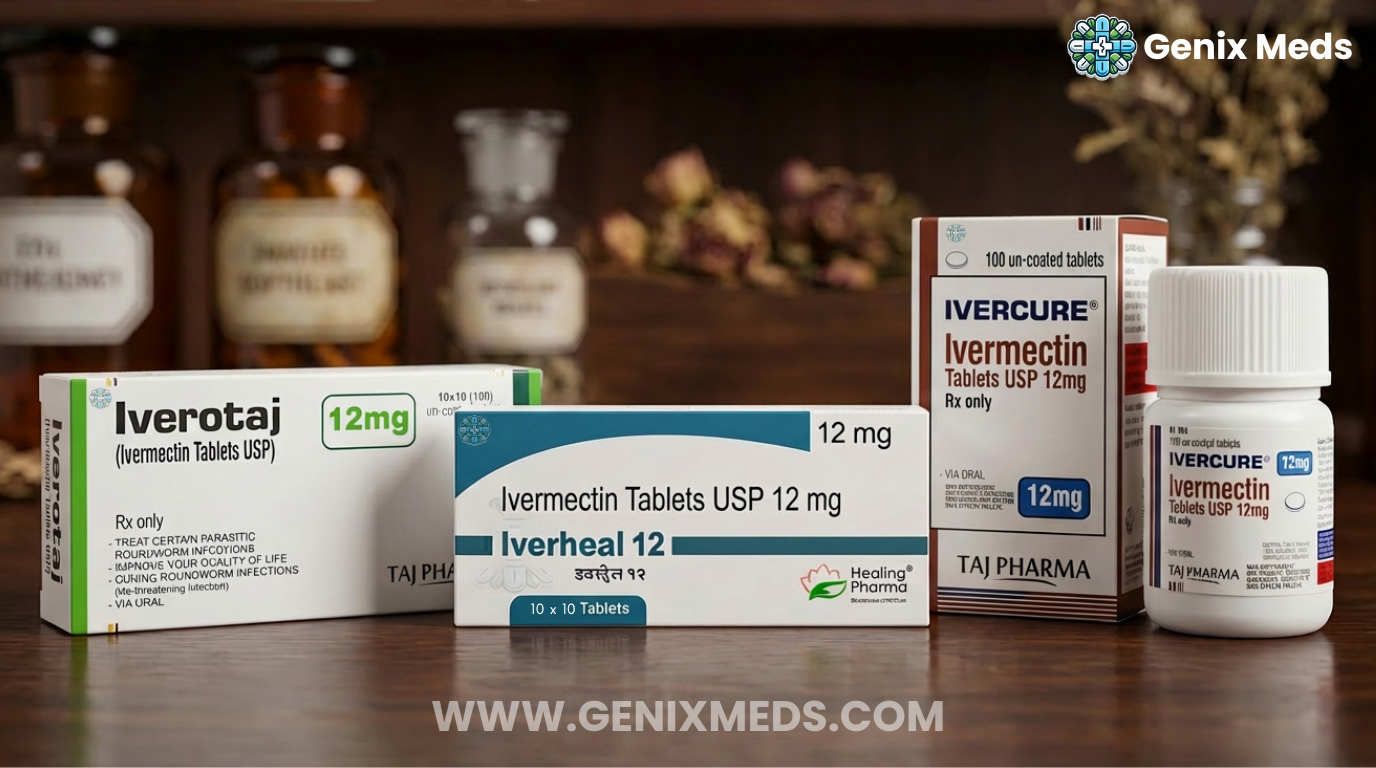
Genixmeds.com stocks two ivermectin options:
- Ivercure 12mg — 12mg ivermectin tablets
- Iverotaj 12mg — 12mg ivermectin tablets
Both products are clearly listed with full product details. Always ensure any ivermectin you purchase is pharmaceutical-grade and appropriately labeled for the intended use.
10.2 Fenbendazole
Fenbendazole for animals is available over the counter at farm supply stores (Tractor Supply, Rural King, etc.) and online. Products like Panacur C (canine) and Safe-Guard are commonly referenced in human protocols, as they are pure fenbendazole in known concentrations.
Some specialty supplement companies now produce human-oriented fenbendazole capsules with measured dosing.
10.3 Mebendazole
Mebendazole for pinworm is available OTC in the US (Reese’s Pinworm Medicine). For broader antiparasitic or research-oriented use, prescription mebendazole or sourcing from reputable international suppliers is the route most people take.
Genixmeds.com stocks MendiTaj 500mg a 500mg mebendazole product:
View MendiTaj 500mg at Genixmeds.com
|
Shop All Antiparasitic Options at Genixmeds.com Genixmeds.com carries Ivercure 12mg, Iverotaj 12mg, and MendiTaj 500mg — browse all three product pages to find what fits your situation. |
11. Frequently Asked Questions
Q: Is fenbendazole the same as ivermectin?
A: No. They are both antiparasitic drugs, but they belong to entirely different drug classes and work through completely different mechanisms. Ivermectin is a macrocyclic lactone that disrupts parasite nerve function by opening chloride channels. Fenbendazole is a benzimidazole that disrupts parasite cell structure by interfering with tubulin polymerization. They are not interchangeable.
Q: What is the difference between fenbendazole and ivermectin?
A: The core differences are mechanism of action, drug class, parasite spectrum, and approval status. Ivermectin works on nerve/muscle function; fenbendazole works on cellular structure. Ivermectin is FDA-approved for human use; fenbendazole is not (though it is closely related to mebendazole and albendazole, which are). Ivermectin is stronger against ectoparasites and filarial worms; fenbendazole covers tapeworms and has broader helminth activity.
Q: Can you use fenbendazole and ivermectin together?
A: There is no known pharmacological interaction that makes this combination inherently dangerous at standard doses. The drugs work via different mechanisms and don’t appear to compete for the same metabolic pathways in a problematic way. However, combination use in humans is not formally validated by clinical trials. If you’re considering this, do so in consultation with a healthcare provider.
Q: What binder should I take with ivermectin?
A: The most commonly recommended binders are activated charcoal (strong, broad-spectrum), bentonite clay (moderate, mineral-based), and chlorella (gentle, food-based). The critical rule: take your binder at least 1–2 hours after your ivermectin dose not simultaneously or the binder may absorb the drug before it can work.
Q: What is the difference between ivermectin and mebendazole?
A: Ivermectin is a macrocyclic lactone that paralyzes parasites via glutamate-gated chloride channels. Mebendazole is a benzimidazole that kills parasites by disrupting their microtubule formation. They target different parasites with some overlap and are sometimes combined for broader coverage. Mebendazole is FDA-approved for human helminth infections; ivermectin is FDA-approved for strongyloidiasis and onchocerciasis, among others.
Q: Does ivermectin kill tapeworms?
A: Ivermectin has limited efficacy against tapeworms (cestodes). It is primarily effective against nematodes (roundworms) and arthropods (mites, lice). For tapeworm treatment, praziquantel is the standard of care; fenbendazole or mebendazole may have some activity against certain tapeworm species.
Q: Which binder to use with ivermectin and fenbendazole?
A: The same binders apply regardless of whether you’re using ivermectin alone or in combination with fenbendazole: activated charcoal, bentonite clay, zeolite, chlorella, or cholestyramine (prescription). The timing principle remains: take binders well after your antiparasitic dose, not at the same time.
Q: Is fenbendazole and ivermectin the same thing?
A: No see the detailed answer above. They are related in purpose (both kill parasites) but entirely different in chemistry, mechanism, and clinical application. This is a common misconception, likely because they frequently appear together in the same health discussions and protocols.
Q: Where can I buy ivermectin and fenbendazole?
A: Ivermectin for human use requires a prescription in the US. Genixmeds.com carries Ivercure 12mg and Iverotaj 12mg. Fenbendazole is available OTC as a veterinary product at farm supply stores or through online retailers. For human-oriented protocols, some supplement companies now produce fenbendazole capsules in measured doses.
Q: Can ivermectin and fenbendazole be used for cancer?
A: Both drugs have shown promise in preclinical research fenbendazole through tubulin disruption affecting cancer cell division, ivermectin through multiple cancer-relevant signaling pathways. However, neither has completed phase 3 clinical trials in humans for oncology indications. They should not be used as a replacement for evidence-based cancer treatment. If you’re interested in exploring them as adjuncts, that conversation needs to happen with your oncologist.
12. Final Word
Fenbendazole and ivermectin are genuinely interesting drugs both in their established antiparasitic roles and in the emerging research on broader applications. The confusion between them is understandable given how often they appear together. But they’re not the same, they don’t work the same way, and they’re not interchangeable.
What they are is complementary. Used thoughtfully with appropriate medical guidance, correct dosing, and realistic expectations they represent two distinct tools in a broader antiparasitic toolkit. When the situation genuinely calls for both, the combination makes logical sense. When it doesn’t, using both unnecessarily adds complexity without benefit.
If you’ve arrived here because you’re dealing with a specific health concern, the most useful next step is a conversation with a healthcare provider who understands both the conventional medical evidence and the emerging research landscape. There’s no substitute for that.
|
Browse Ivermectin & Mebendazole at Genixmeds.com Genixmeds.com carries Ivercure 12mg, Iverotaj 12mg, and MendiTaj 500mg. Visit the product pages for full details on each option. |
Medical Disclaimer
This article is intended for informational and educational purposes only and does not constitute medical advice, diagnosis, or treatment. Fenbendazole is not FDA-approved for human use. Ivermectin for human use requires a valid prescription in the United States. Neither drug should be self-administered without guidance from a qualified healthcare provider. References to research on antiproliferative properties do not constitute endorsement of these drugs for cancer treatment. Always consult your physician before starting, stopping, or modifying any medication.