
Mar
You’ve been using Mounjaro for a few months, or you’re considering doing so. You’ve already heard about the short-term adverse effects, which include nausea, possible GI issues, and the adjustment period. You’re curious about knowing more, though. How does your body change after a year? For two years? What long-term commitments are you making? That’s a genuine question, and you should receive a genuine response rather than a flashy summary that ignores the things that are truly worth keeping an eye on or a list of negative occurrences that sound more concerning than they actually are. This is the issue: In the field of weight loss or management, Mounjaro is still relatively new.
By the end of this blog, you’ll know everything about Mounjaro, long-term side effects, what the reality of thyroid and cancer risks is, and what you can do right now to protect yourself while you’re taking it.
1. Why does this question arise?
The FDA approved Mounjaro (Tirzepatide) for type 2 diabetes in May 2022. And the same molecule that Mounjaro contains was later approved for chronic weight management under the brand name Zepbound in late 2023. Since then, it’s one of the most prescribed and most searched drugs in the country.
The SURMONT clinical trials reported an average of 15-22% weight loss over 72 weeks. These numbers haven’t been seen before in a non-surgical intervention, and that’s the reason why it’s driving so much attention from people towards it.
But with these amazing results comes a very real question: what are its long-term side effects? The clinical trials ran for roughly 72-88 weeks, so the post-market surveillance is still ongoing. And the answer to our question is still being gathered and researched in real time.

2. How Mounjaro Works? And Why That Matters for Side Effects?
Mounjaro is a dual GIP/GLP-1 receptor agonist. So in simple words, it means that: it activates two different hormone receptors that regulate blood sugar, appetite, and how the body stores energy in your body, not like the older GLP-1 drugs (Ozempic, Wegovy) do.
GLP-1 (glucagon-like peptide-1) slows down gastric emptying, which means how quickly the food leaves your stomach, and signals your brain that you’re full. GIP (glucose-dependent insulinotropic polypeptide) amplifies the insulin response and also plays a significant role in fat metabolism.
That’s the reason why tirepatide’s weight loss numbers outperform semaglutide. It’s also why GI side effects tend to be more pronounced as you’re slowing the entire digestive process more aggressively, as compared to a single-receptor like semaglutide.
Understanding the mechanisms of Mounjaro matters because most of its short-term and long-term side effects flow directly from what the drug does. Slowed stomach emptying, Rapid caloric restriction, and rapid weight loss. Knowing what it helps you manage can clear many of your questions.

3. Short-Term vs. Long-Term Side Effects
Most of the side effects experienced in the first weeks of taking the treatment of Mounjaro are mostly GI-related, and most of them improve as your body starts to adapt while taking the medication. And that’s genuinely good news.
The ones that need extra attention in the long run are different in nature. They’re slower to develop, less operatic, and get missed easily if you don’t dive into them. Here’s what you need to know:
But the thing that matters the most is: Short-term side effects, which are mostly about adjustment. Long-term concerns are mostly about what happens to your body composition, your gallbladder, and your kidneys when you’re in a prolonged and significant caloric deficit driven by a powerful appetite suppressor.
4. The GI Side Effects that you need to know
Nausea, vomiting, and Diarrhea are the 3 common side effects that everyone asks about. Nausea is the most commonly reported side effect in the SURMOUNT trial, affecting a significant number of participants, particularly at higher doses.
What’s Actually Happening
GLP-1 activation slows the rate at which your stomach pushes the food into your small intestine, which is also known as Gastric emptying. When this process slows down significantly, your stomach feels fuller for a longer duration.
And when it slows down too much, especially in the starting doses or when you increase the dose. Nausea comes into light.
Think of it as a highway; your stomach is receiving food, but the exit is already blocked. This buildup causes discomfort, and over time, your body recalibrates itself to the new normal, and the traffic flows smoothly over time.

How Long Does It Last?
For most of the people, these GI side effects peak in the first 4-8 week time frame of each dose escalation. The standard dose of Mounjaro escalates every 4 weeks, so you may experience a new wave of adjustments in your body each time you increase the dose.
But the good news is that, in the maintenance dose, the GI effects typically settle down. Most of the participants reported a significant improvement in their body at the end of week 12 at any given dose level. A small ratio of roughly 5-10 % found GI side effects significant enough to discontinue.
What Actually Helps?
-
-
Eat small but more frequent meals: Large meals will overpower the stomach due to a slow stomach. Five small meals are better than 3 big ones.
-
Avoid high-fat meals at the dosing time: Taking fatty meals will slow down gastric emptying even more.
-
Don’t sleep or lie down after eating: Let the food move to be processed by the body.
-
-
Stay hydrated (especially when vomiting or diarrhea is present): Dehydration will increase nausea and will put stress on your kidneys.
-
Ask about the dose timing with your prescriber: Some people can tolerate evening doses as compared to morning ones; this is worth experimenting with.
If nausea continues even after the 8-week mark at a stable dose, then it’s important to consult your prescriber and do the rest accordingly.
5. Does Mounjaro Cause Hair Loss?
The answer is Yes and No. Here’s what you need to know before deciding:
Hair loss associated with Mounjaro is true and is recorded in both clinical trials as well as in the patient experiences. But Mounjaro isn’t directly attacking your hair follicles. What happens in the body is called Telogen effluvium, it’s a temporary disruption of the hair growth cycle, which gets triggered by rapid weight loss and caloric restriction.

What Is Telogen Effluvium?
Your hair grows in multiple growth cycles. Normally, about 80-85% of your hair is in an active growth cycle phase. But due to physical stress like rapid weight loss, surgeries, illness, and childbirth, a large number of hair follicles enter the resting phase. And as a result, after 2-4 months, that hair sheds all at once.
This results in hair thinning and not bald patches, but an overall reduced density in your hair. It’s alarming, especially when you’re losing a significant amount of hair in the shower or on your brush.
Is This Side Effect Permanent?
In most cases, the answer is no. Telogen effluvium from weight loss is temporary. When your body weight stabilizes and your body is no longer in a physiological stress, the normal hair cycle and regrowth of your hair begins, typically within 6-12 months.
The rate of weight loss plays an important role. Losing more than 1-2 pounds per week consistently will lead to increased risks of severe hair loss. And if your hair is shedding at a pace that really concerns you, then slowing your escalation dose is a preferable option to discuss with your prescriber.
What actually helps?
-
Prioritize protein intake: Hair is mainly made of keratin, which is a protein. And if you’re in a calorie deficit and your protein intake is low, the hair is one of the first things that will be directly affected.
-
Biotin and Iron levels: Deficiencies of both of these are common in calorie deficit and can worsen the hairfall. A basic nutrition report is worth checking.
-
Be gentle: Aggressive brushing, tight hairstyles, etc. May lead to worsening the shedding of the hair follicles and will put it into a vulnerable phase.
Hair loss after taking Monujaro is always temporary. But, if you’re noticing continuation of scalp changes, patchy hair loss, or the overall loss continues beyond a 12-month frame, then it’s preferred to consult your prescriber.
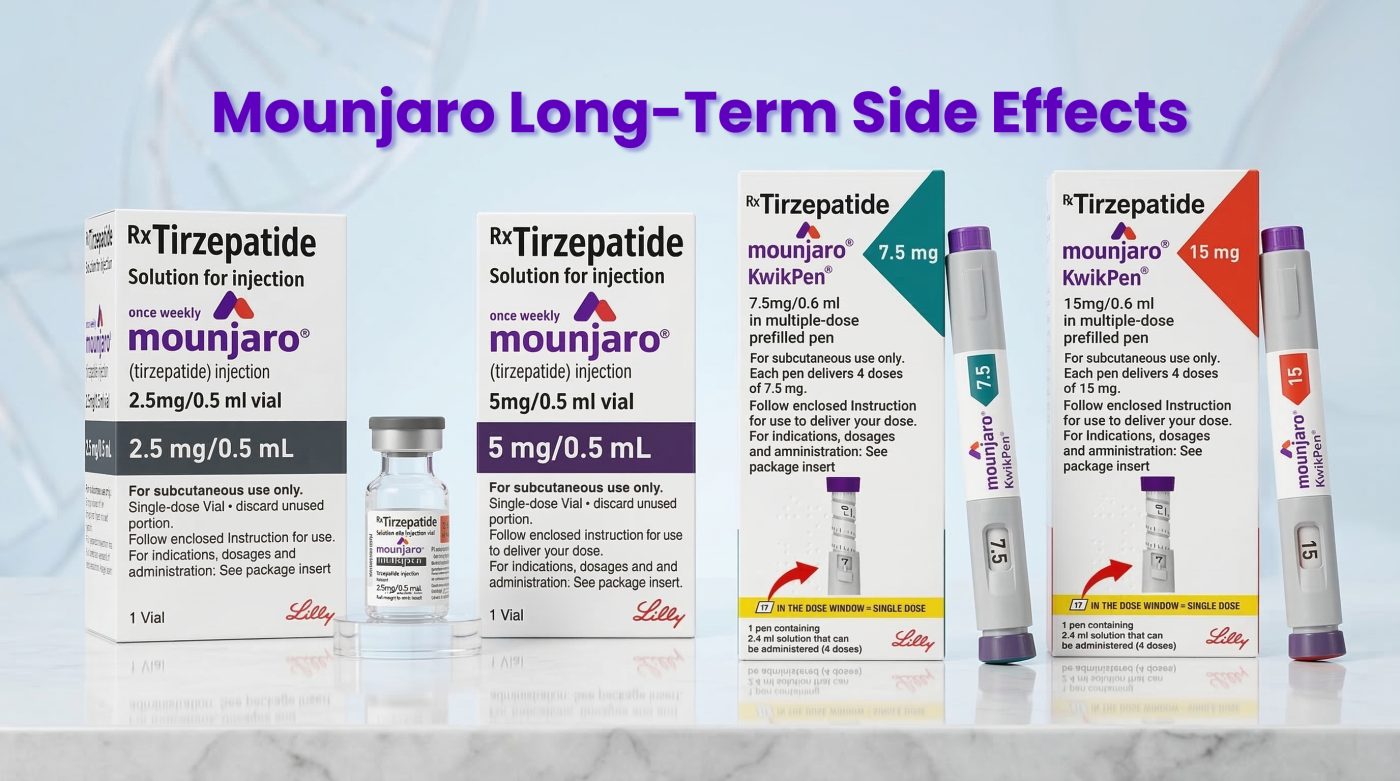
Mounjaro Available at Genixmeds.com
Genixmeds.com carries Mounjaro in 2.5mg, 5mg, and 7.5mg doses. Browse individual product pages for full details.
6. Muscle Loss on Mounjaro: The Side Effect Which Nobody Talks About
When you lose weight through any method, you don’t lose only fat. You’ll also lose some muscle mass. This is a normal physiological reality of following a calorie deficit. But the real question is how much and what you can do about it?

What the Data Shows?
Study of SURMOUNT trials and similar GLP-1 data shows that approximately 25-40% of the total weight loss on these medications comes from lean mass, which is muscle and bone density rather than body fat. This proportion varies significantly based on the person’s protein intake, physical activity, and the pace of weight loss.
For context: It’s not different from other methods of weight loss. But this information matters as muscle mass is a metabolically active tissue. And losing it slows down the resting metabolic rate in your body, which means when you eventually stop the drug. Some body weight will return (more on this in Section 12), you’ll face a different metabolic baseline than you had before.
Why This Matters Long-Term
If you’re losing around 50 lbs of your body weight with Mounjaro and 15-20 pounds (approx. 33%) of those are muscle, then you haven’t just lost fat, but you’ve also lost your strength, functional capacity, and metabolic buffer of your body. For older adults, muscle loss has implications like imbalance, reduced bone density, and the risk of falls and fractures.
This isn’t a reason not to take the drug, but it means to take the drug alongside a deliberate protein plan to preserve your muscles.
The Muscle Prevention Protocol
Resistance training combined with adequate protein is the most evidence-backed combination for preserving lean mass during GLP-1-induced weight loss. This is a care to prevent muscle loss in your body while taking drugs like Mounjaro or just a calorie-deficient plan.
7. Gallbladder Problems and Mounjaro
Gallbladder disease, specifically gallstones (cholelithiasis) and gallbladder inflammation (cholecystitis), is a recorded risk with GLP-1 medications and is common in rapid weight loss in general.
Why Does This Happen?
Bile is produced by your liver, and it gets stored in your gallbladder. It is released when you eat to help digest fats. And, when you’re eating very little, as many Mounjaro users are, due to powerful appetite suppression. The bile just sits in your gallbladder for a longer time without being released. And this allows cholesterol in the bile to crystallize, forming stones.
Rapid weight loss supports it even more by changing the composition of the bite itself, making it more saturated with cholesterol. The combination of reduced bile flow and altered bile composition leads to gallstone formation.
How Common is it?
In the SURMOUNT-1 trial, cholelithiasis occurred in about 1.5% of participants in the 15mg tirzepatide group versus 0.5% in the placebo group. That’s a significant difference, though the absolute numbers are still relatively low.
The risk is higher in a rapid rate of weight loss, and that’s another reason for a “go slow” approach to dose escalation, which isn’t just about GI comfort.
What to Watch For?
The gallbladder typically causes pain in the right upper quadrant under your right rib cage, and that may radiate to your right shoulder or back. And it often occurs after a fatty meal. If you experience severe and consistent pain in that area along with nausea and fever, then don’t wait, as it’s an alarming situation.

8. Kidney Health and Mounjaro
Mounjaro doesn’t directly damage your kidneys; the kidney concern is indirect, and it’s manageable and controllable.
The pathway goes like this: GI side effects like vomiting and diarrhea cause dehydration. Dehydration reduces blood flow to your kidneys. If the reduced blood flow continues for a longer duration, then it can lead to damage to your kidneys. If a sudden decline in your kidney function is caught early, it is reversible.
Cases of acute kidney injury linked to GLP-1 drugs have been reported in the records, almost always in the context of significant GI illness and inadequate fluid replacement.
Who Should Be Most Alert
- Anyone with pre-existing chronic kidney disease (CDK) will have less reserve capacity to handle fluid shifts.
- Older adults’ kidney function naturally declines, and it will affect their kidney function, and the dehydration will worsen.
- Anyone on other medications that affect kidney function, like NSAIDs, ACE inhibitors, ARBs, and diuretics.
The practical takeaway: Hydration is non-optional on Mounjaro. If you’re vomiting more frequently in a day and can’t keep the fluids down, then it’s a sign to visit your doctor. Oral rehydration solutions like Pedialyte work faster than water alone in acute situations.

Mounjaro 5mg at Genixmeds.com
Ready to move up in dose? Mounjaro 5mg is available at Genixmeds.com. View the product page for full details.
9. The Thyroid Cancer Warning
If you’ve seen Mounjaro’s prescribing information or its ads, you’ve heard about the warning mentioned, which states that it may result in thyroid C-cell tumors. This is the big one that stops people from taking it. Let’s see what that means in detail:
Where Does the Warning Come From?
In rodent studies, tirzepatide, like other GLP-1 receptor agonists, causes dose-dependent thyroid C-cell tumors. It includes medullary thyroid carcinoma (MTC), a rare type of thyroid cancer. This finding is consistent in the GLP-1 drug class.
But here’s a critical piece of information: These findings are from animal studies only. Rodents have a much higher density of GLP-1 receptors in their thyroid C-cells as compared to humans. And so, the relevance to humans is biologically uncertain.
What the Human Data Shows?
You’ll be wondering what about the human data? In clinical trials involving tens of thousands of human participants, no confirmed cases of medullary thyroid carcinoma referred to tirzepatide have been identified. Alternatively, post-market surveillance continues, and cases of thyroid neoplasm have been reported, but at rates that don’t clearly exceed the background incidence.
What does this mean to you?
Mounjaro is contraindicated if you have:
- A personal or family history of medullary thyroid carcinoma (MTC)
- Multiple Endocrine Neoplasia syndrome type 2 (MEN 2)
If neither applies to you, the risk from the available human data is not established as elevated. Consult your prescriber about it, as it’s not preferred to be ignored.

10. Mounjaro Side Effects and Cancer
Besides thyroid, you may have seen claims about Mounjaro and cancer risk; sometimes it’s concerning, and most of the time it’s confusing. Here’s what you need to know:
GLP-1 Drugs and Colorectal Cancer
A 2024 study published in JAMA Oncology found that semaglutide (the active ingredient in Ozempic/Wegovy) was associated with a lower number of colorectal cancers in obese patients suffering from type 2 diabetes compared to other diabetes patients. Trizepatide wasn’t specifically studied, but the GLP-1 mechanism is shared.
This is observational data, and it doesn’t prove that GLP-1 drugs prevent colorectal cancer. Obesity itself is a major risk factor for it, and this drug reduces the risk secondarily. Please remember that the research is still ongoing.
What About Pancreatic Cancer?
Earlier GLP-1 drugs sparked concern about pancreatic cancer based on pre-clinical trial data. But Large-scale post-market trials and meta-analysis have not confirmed any risks in humans. The FDA is continually monitoring this, but as of now, no data support that there’s any risk of pancreatic cancer after taking tirzepatide.

11. How Long Do Mounjaro Side Effects Last?
The duration entirely depends on which type of side effect you’re looking for.
GI Side Effects (Nausea, Vomiting, Diarrhea, Constipation)
These side effects typically peak in the first 4-8 weeks at any given dose. With every dose escalation, you may experience a shorter recurrence. Most people reach a stable GI baseline after 3-4 months of their maintenance dose. A minority of people, which is roughly around 5-10%, may find it repetitive enough to discontinue.
Hair Loss
Typically, it’s 2-4 months after starting or significantly escalating the drug, and please note that this is the telogen effluvium lag. Shedding typically peaks around 3-6 months and starts improving once weight loss slows or stabilizes. Most people see significant regrowth within 6-12 months.
Fatigue
Some people experience fatigue, particularly in the early weeks, which is because of the caloric restriction and partly from the body adjusting to different metabolic signaling. For most of the people, this improves once the intake stabilizes. Persistent fatigue is a sign of inadequate nutrition and not just about the drug.
Muscle Loss
This is the side effect that doesn’t simply “Resolve.” It increases over the course of treatment if you’re not actively working against it. The effects of it are gradual and often ignored (as you’re actively losing overall weight), which is exactly why it needs deliberate attention rather than waiting.

12. What Happens When You Stop Taking Mounjaro?
Here’s the part that is often overlooked by people. Monujaro is not a course of treatment with a defined endpoint; rather, it’s a chronic medication. And, when you stop taking it, the hormonal signals that were suppressing your appetite and slowing the digestion of the body go away. And that takes place relatively quicker.
Weight Regain
Clinical data on this is clear and consistent: Most of the weight lost on the GLP-1 drugs returns after stopping them. The SURMOUNT-4 trial, which specifically studies weight regain after discontinuation of this drug, found that the participants regained approximately two-thirds of their overall weight loss within a year of stopping tirzepatide.
It’s a physiological response from the body. The drug suppresses the hormonal drivers of appetite. When the drug leaves, those drivers return and are often stronger than before. Because weight loss itself triggers compensatory hunger mechanisms.
Mounjaro 7.5mg at Genixmeds.com
Genixmeds.com has Mounjaro 7.5mg for those continuing dose escalation. View the product page for full specifications.
13. How to Manage Long-Term Side Effects?
A few practical principles that apply to this are:
Don’t Chase Faster Results
People get tempted to increase the doses quickly in order to increase the speed of weight loss. But a slower escalation in which a person waits for the GI side effects to settle down reduces almost every long-term risk discussed in this article. Gallbladder issues, Hair loss, Muscle loss, and Kidney stress are all worsened by the rapid weight loss.
Build Your Protocol Around the Drug
While Mounjaro handles the appetite side, you still need to handle the nutrition and movement side. It means meeting your daily protein needs, engaging in consistent resistance training, staying hydrated, and getting regular lab tests to catch any nutritional deficiencies before they occur.
Monitoring and Not Assuming
Useful labs for anyone who’s taking Mounjaro on a long-term basis:
- Complete metabolic panel (kidney function, liver enzymes) is a baseline test performed every 6 months.
- Thyroid function should be checked annually or if symptoms develop.
- CBC and iron studies, especially if hair loss is significant.
- HbA1c if using for Diabetes management.
- Lipid panel, GLP-1 drugs generally improve lipid profiles, but it is worth confirming.
These reports aren’t mandatory for everyone. Your prescriber can help you decide which are relevant to your specific situation.
Communication is the Key
If you’re nauseous for three months and you haven’t mentioned it yet, then you might be tolerating something which needs to be fixed. A timing change, an antiemetic. Don’t ignore what you’re going through to avoid adverse effects.
14. Mounjaro Long-Term Safety
The SURMOUNT trial, which includes SURMOUNT-1,2,3,4 and several sub-studies, provides the most comprehensive long-term safety data that we have for tirzepatide in weight management.
Key Safety Findings from SURMOUNT
- Cardiovascular: No increased cardiovascular risk was detected in the available trial data. The SURPASS-CVOT trial (which studies the cardiovascular outcomes in type 2 diabetes patients) showed a significant reduction in major cardiovascular events, which is a really great benefit.
- Pancreatic: Pancreatitis took place, but at a rate which was not higher than the rate of placebo. Lipase and amylase elevations were seen in some of the participants, and these were mostly symptomless and didn’t increase in clinical pancreatitis.
- Hepatic: Increase in Liver enzymes was rare and transient. There were no signals for drug-induced liver injury at standard doses.
- Cardiovascular in obesity: The SELECT trial equivalent for tirzepatide (SURMOUNT-MMO) is ongoing. The results are established but not fully published as of early 2026.
The Honest Caveat
72-80 weeks is a satisfactory trial duration, but it’s not a lifetime. The drugs in this class are new enough and don’t have enough safety data. Post-market surveillance is the mechanism through which these signals emerge, and no major unexpected long-term safety signals have appeared for tirzepatide.
For most people weighing the known risks of obesity against the noted risk profile of tirzepatide, the data strongly favour this medication. This calculation is worth talking to your healthcare provider.
15. Frequently Asked Questions (FAQs)
How long do Mounjaro side effects last?
GI side effects, which are Nausea, vomiting, and diarrhea, typically peak in the first 4-8 weeks of each dose increase and improve from there. At a stable maintenance dose, most people notice a significant GI improvement by the 3-4 month mark. Hair loss peaks around 3-6 months and usually resolves after 6-12 months of weight stabilization. Muscle loss doesn’t resolve on its own and requires deliberate nutrition and exercise strategy throughout the treatment.
Does Mounjaro cause Hair loss?
Yes, but the drug isn’t directly causing it. Rapid weight loss in the body triggers a specific phenomenon named “Telogen effluvium,” which is a temporary disruptor of the hair growth cycle where a large percentage of hair follicles enter a resting phase simultaneously, then shed 2-4 months later. It’s almost temporary in the body. Maintaining adequate protein intake and not losing weight faster than 1-2 pounds per week significantly reduces the risk.
What are the long-term effects of Mounjaro?
The most clinically proven long-term side effects are: Muscle mass loss (manageable with resistance training and protein), Gallbladder disease risk (especially with rapid weight loss), and the question of weight regain arises when the drug is discontinued. Kidney stress is an indirect risk associated with dehydration from GI side effects. The thyroid cancer warning comes from the animal data, and there are no human cases to date.
Does Mounjaro cause cancer?
The boxed warning, which you see on the Mounjaro’s label, refers to the thyroid C-cell tumors, a finding from rodent studies that has no confirmed clinical trials in humans. No established rate of thyroid or other cancers has been established in humans taking tirzepatide. The drug is contradicted to those who have a family history of medullary thyroid carcinoma or MEN 2. Surprisingly, Observational data from related GLP-1 drugs suggest a potential reduction in colorectal cancer risk.
What happens when you stop taking Mounjaro?
Most of the weight lost tends to return; the clinical data show that approximately two-thirds of lost weight returns within a year of stopping the drug. GI side effects resolve relatively quickly after discontinuation. Hair loss may continue for a short period, then stabilize. Muscle loss during the period doesn’t automatically recover; it requires rebuilding. Most of the physicians recommend having a continuity plan before stopping rather than after.
Is long-term use of Mounjaro safe?
Based on the existing clinical data spanning 72-88 weeks, tirzepatide has an established safety profile with no major unexpected long-term signals. But ten-year data doesn’t exist yet, as the drug is too new. The post-market surveillance is ongoing and will continue to define the long-term effects. For most people, the risk-benefit of this drug is documented in the context of the health risks associated with obesity.
Can Mounjaro damage your kidneys?
Not directly, the kidney concern is indirect as the dehydration from GI side effects (Vomiting, Diarrhea) can reduce blood flow to the kidneys, and if it continues for a prolonged period of time, it may cause acute kidney injury. Staying hydrated and managing the GI side effects will greatly reduce the chances of kidney damage. People with pre-existing kidney disease may consult with their doctor before taking this medication.
16. The Bottom Line
Mounjaro is an effective medication with a well-defined short-term safety profile and an ongoing long-term profile, as it’s a newer drug. The side effects of it are real and documented and are mostly manageable. But, the ones that require the most attention are: Muscle loss, Gallbladder risk, and the consequences of stopping the intake of this medication shouldn’t be ignored.
Here’s what we recommend to anyone starting or currently on Mounjaro: Go slow on your drug escalation period, build resistance training and a protein habit before taking it, stay hydrated, and monitor your body on a regular interval. Also, make sure that the rest of your protocol supports what happens to your body in the context of weight loss.
If you want to source Mounjaro at your doorstep without any hassle, then we’ve got you covered. At Genixmeds, We’ve 2.5mg, 5mg, 7.5mg, and 15mg available. View them by clicking the link attached below.